

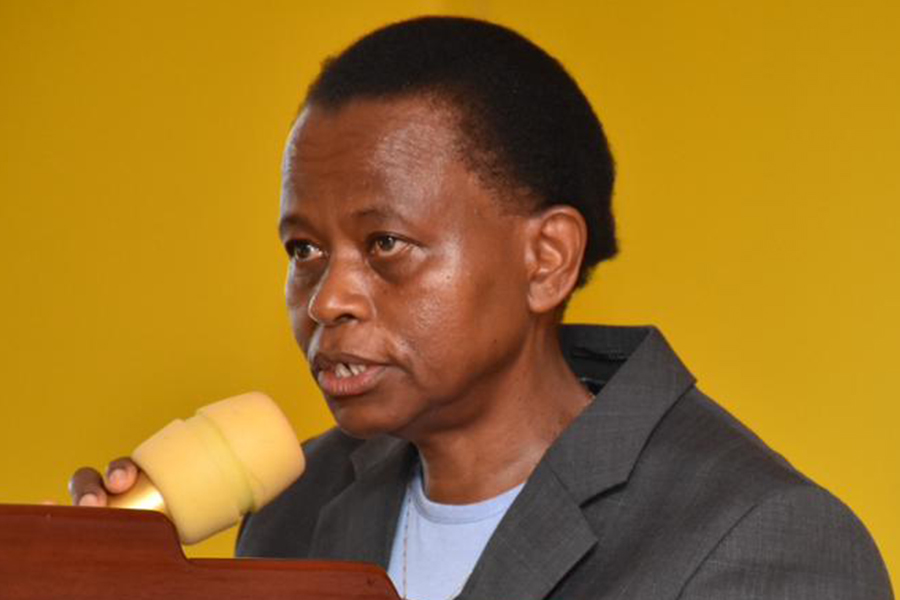
The government is set to overhaul Uganda’s civil service by tying job security to performance, in what officials describe as a major shift aimed at improving accountability and service delivery.
The reforms were announced by the Head of Public Service and Secretary to Cabinet, Lucy Nakyobe, during a meeting with local government human resource managers and Secretaries to District Service Commissions at the National Leadership Institute on April 28.
Nakyobe said government will revise standing orders to ensure that the long-held status of being “permanent and pensionable” is no longer automatic, but conditional on performance.
“We are going to change the clause in the standing orders which says that you are permanent and pensionable. We are going to add on that you are permanent and pensionable if you deliver,” she said.
The proposed reforms signal a significant shift in public sector management, with increased emphasis on measurable output, efficiency, and accountability.
Nakyobe warned that government will intensify monitoring, inspection, and evaluation across all institutions.
“Some of you sit in your offices and swing your chairs and forget why you are there. This is no longer going to be business as usual,” she said.
As part of the changes, government will introduce mandatory rotation for Permanent Secretaries and heads of departments, limiting their tenure in one station to three years.
The move is intended to break entrenched patronage networks and reduce institutional capture.
“The Permanent Secretaries and heads of departments have to be rotated regularly. This idea of saying ‘this is my accountant or procurement officer, don’t shift him or her’ is coming to an end,” she said, warning that refusal to comply with transfers could lead to dismissal.
Nakyobe also raised concerns about corruption and unprofessional conduct within the public service, directly accusing some human resource officials of enabling malpractice.
“Corruption is not only in the DSCs; it is also in the Public Service Commission. Corruption in the public service is not an allegation—it is a fact,” she said.
She linked persistent corruption in District Service Commissions to the current appointment system, where members are recommended by district executive authorities, arguing that this creates loyalty conflicts that undermine merit-based recruitment.
“I have recommended that we change the way members of DSCs are appointed as a way of fighting corruption,” she noted.
Nakyobe warned that compromised recruitment processes weaken the entire system, urging HR managers to uphold integrity and professionalism in hiring.
“You shape the quality, discipline, productivity, and integrity of the public service. If recruitment is compromised, the system is weakened,” she added.
Meanwhile, the Permanent Secretary in the Ministry of Local Government, Ben Kumumanya, cautioned against the sale of government jobs, describing it as a key driver of corruption at the local level.
“We want the population to come out and inform us of the corruption mayhem,” Kumumanya said, noting that a circular has been issued requiring all job advertisements to clearly state that no payments should be made to secure employment.
He, however, acknowledged that lack of evidence remains a major challenge in prosecuting corruption cases, as many victims fear reporting to oversight bodies such as the Inspectorate of Government, the Criminal Investigations Directorate, and the State House Anti-Corruption Unit.
“People fear to report corruption cases, yet without evidence it becomes difficult to take action,” he said.
The reforms mark one of the strongest signals yet from government to tighten discipline in the public service, with officials indicating that future retention and career progression will increasingly depend on demonstrable performance and adherence to ethical standards.
